

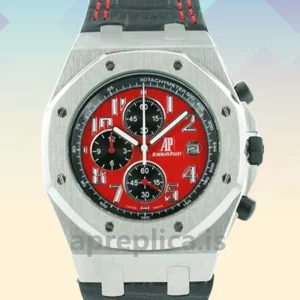
Royal Oak Offshore
Design & Wearing Guide for Audemars Piguet Royal Oak Offshore Replica
If your eye tends to stop on strong shapes and clean metal surfaces, you’ll probably notice the Royal Oak Offshore style before anything else. There’s something about the way the geometry sits on the wrist — a kind of confident, engineered presence — that people either recognise instantly or grow into over time. In this guide, the focus stays on the audemars piguet royal oak offshore replica category from a design angle: how the structure feels in the hand, how the finishing reacts to light, how the case settles on the wrist, and what the dial texture does in day-to-day use. Nothing here touches pricing, sourcing or authentication; it’s purely about how the object behaves and looks.
Within the broader AP-inspired universe, the top quality replica Audemars Piguet classification helps clarify how Offshore aesthetics fit into a higher-level design ecosystem, from slim classic silhouettes to more assertive, sport-forward executions.
1. Why Offshore Style Is Immediately Recognizable
1.1 The Octagonal Architecture and Industrial Identity
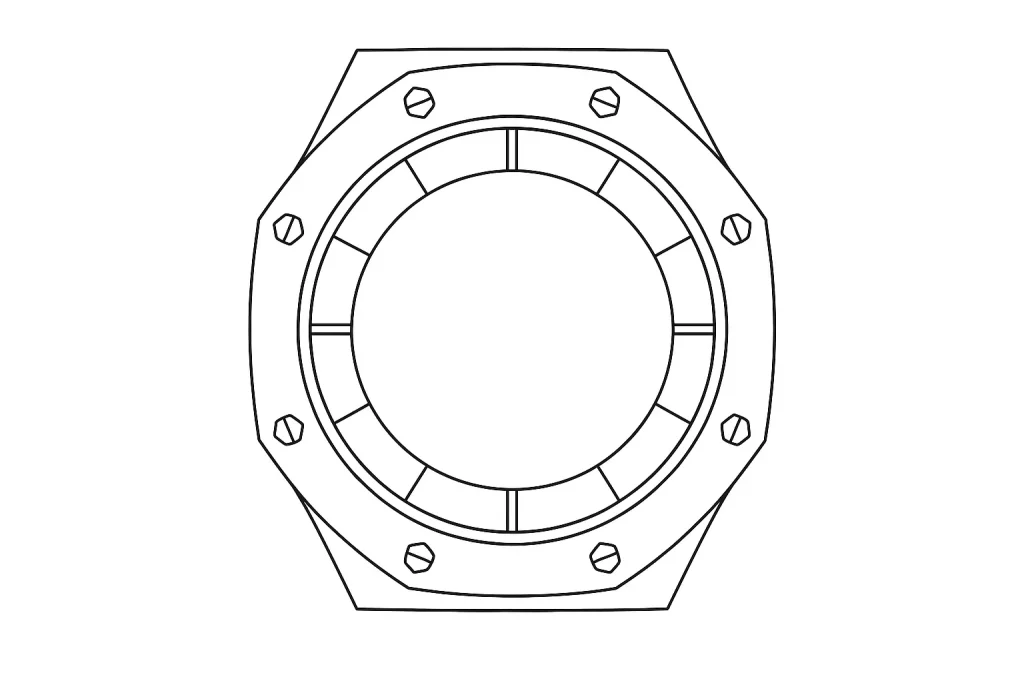
The Offshore silhouette feels purpose-built: every plane, screw, and bevel appears to fulfil a structural intention. Its iconic octagonal bezel, secured by exposed hex screws, forms a repeating rhythm around the dial that remains highly legible even from a distance.
This identity, on Audemars Piguet Royal Oak Offshore replica watches, is often furthered by thicker steps in the bezel, more robust brushing and crisper polishing along the edges. In many Offshore-style executions, case diameters fall in the approximate 42–44 mm range, while thickness often rests around 13–16 mm with lug-to-lug spans that can sit between roughly 50–54 mm depending on the configuration of the timepiece. These multi-plane surfaces catch light in linear “tracks” that reinforce a sense of engineered intent rather than soft jewellery-like sheen.
1.2 Offshore vs. Classic Royal Oak
The classic Royal Oak — represented in the audemars piguet royal oak replica category — embodies slim, architectural refinement with relatively moderate thickness and a flatter stance on the wrist. Offshore, by contrast, expands the geometry outward and upward, emphasising:
- More substantial case height and perceived depth
- Reinforced crown guards and pushers that visually frame the case flank
- Deeper transitions between bezel, case, and strap attachment points
Rather than forming a hierarchy between the two, they express the same design DNA at different intensity levels: classic Royal Oak reads as restrained structure, while Offshore introduces a deliberately more muscular and sport-forward interpretation.
2. Style Positioning & Who Offshore Suits Best
2.1 Sports-Luxury Meets Street-Tech
Instead of a traditional sports watch, Offshore feels like wearable architecture. It merges mechanical clarity with contemporary styling, creating a confident, structured look. This intersection positions audemars piguet royal oak offshore replica squarely between modern luxury and urban street-tech aesthetics.
2.2 Wearer Profiles
- Performance & techwear enthusiasts — structured jackets, technical fabrics, sneakers, layered fits.
- Hybrid business-casual professionals — moving between meetings, cafés, and social evenings.
- Visual storytellers — photographers, creators, and anyone who enjoys reflective, sculptural surfaces.
2.3 Wrist Size & Personality Alignment
In practice, wrist comfort is influenced by both circumference and how the watch distributes its visual weight. Many wearers use the following ranges as a starting point when evaluating Offshore proportions:
| Wrist Range | Typical Measurement | Observed Preferences* |
|---|---|---|
| Slim | 6.0–6.5 in / 15–16.5 cm | Compact cases; darker or matte dials; rubber straps to reduce visual mass |
| Medium | 6.5–7.25 in / 16.5–18.5 cm | Balanced compatibility; both steel and rubber perform well |
| Large | 7.25 in+ / 18.5 cm+ | Bolder bezels and steel bracelets remain proportional and stable |
*Based on general wrist–watch ergonomics observations frequently cited by collectors and strap-fit specialists.
Preference also varies by personality: expressive dressers often gravitate toward higher contrast and crisp bezel transitions, while those who prefer subtlety lean toward softer palettes that visually “blend” with the case.
3. Understanding Case Size, Thickness & Weight
3.1 Visual Presence Over Millimetres
The Offshore look is defined by how it occupies “visual territory”: diameter governs frontal presence, thickness establishes vertical architecture, and weight reinforces physical stability. On paper, many audemars piguet royal oak offshore replica pieces may list diameters in the low-40 mm range and thickness around the mid-teens, but real-world wearing comfort depends more on the combination of diameter, thickness, lug-to-lug length and strap integration than on any single number.
For example, a watch that measures 42 mm across but stays around 51–52 mm lug-to-lug with a well-curved strap can feel more balanced than a numerically smaller piece with straighter lugs and a rigid first link. Likewise, an extra millimetre of thickness may be barely noticeable if the weight is well-distributed and the case sides are visually broken up with steps and bevels.
| Approx. case diameter | Typical wrist circumference | Perceived presence on wrist |
|---|---|---|
| ≈ 41–42 mm | ≈ 6.0–6.75 in (15–17 cm) | Structured but controlled; suitable as a daily anchor for many wearers. |
| ≈ 42–43 mm | ≈ 6.75–7.25 in (17–18.5 cm) | Clear Offshore character; reads as confidently bold without overwhelming most medium wrists. |
| ≈ 43–44 mm | ≈ 7.25 in+ (18.5 cm+) | Maximised presence; best for those who intentionally want the watch to lead the wrist visually. |
All dimensions and ranges in this guide are generalised from common design patterns in the Offshore-style category and are not OEM specifications.
3.2 Ergonomics: Lug Curvature & Strap Flex
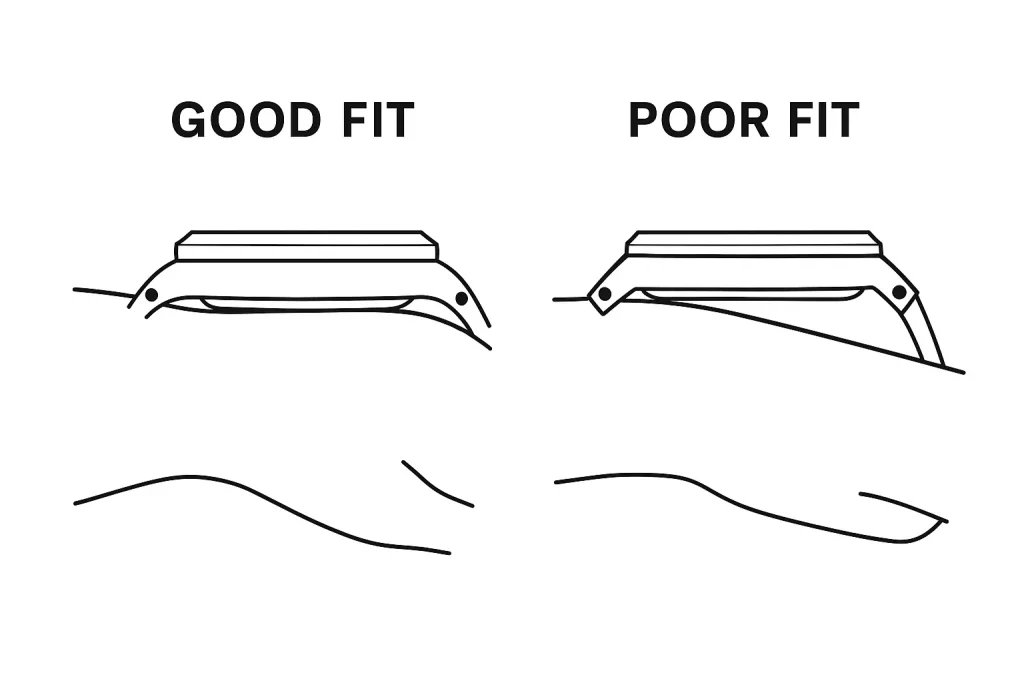
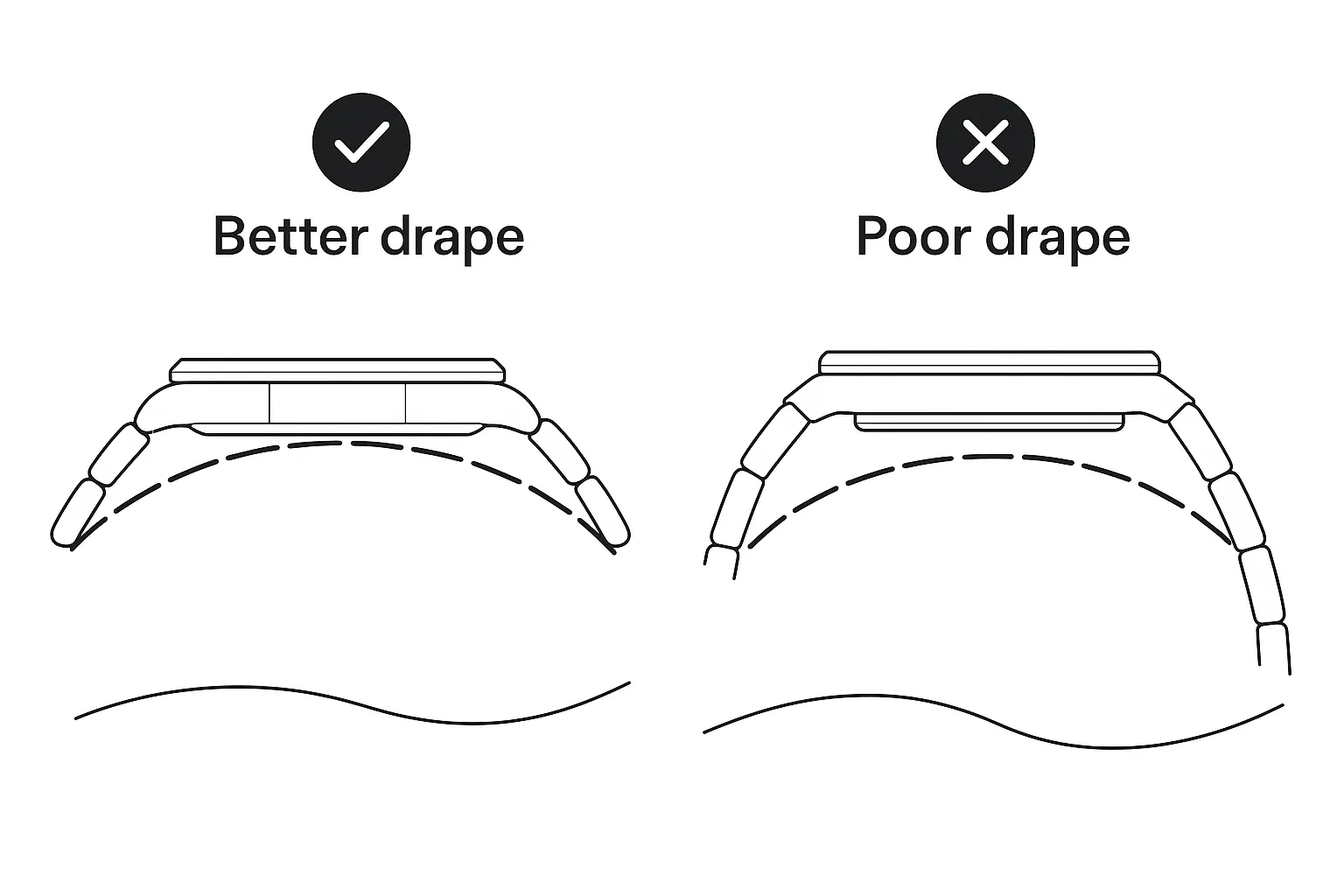
From a general wrist-ergonomics perspective, comfort largely depends on how the case settles into the wrist. Downward-curving lugs and flexible first links help the watch nest securely and reduce “overhang” on smaller wrists. Straight or rigid connections exaggerate the mechanical presence and can cause rocking and discomfort.
On many Offshore-style designs, the integrated strap or end-link system acts almost like a hinge between the case and the wrist. When these first elements articulate quickly and follow the natural curve of the arm, even a visually assertive watch can feel surprisingly secure in daily use.
3.3 Real-World Fit Tests
- Boundary test: Viewed from above, lugs should not project significantly beyond the flat top surface of your wrist. A small amount of curvature is normal, but clear overhang is usually a sign that the piece is at or beyond your upper comfort limit.
- Motion test: With the strap sized correctly, the watch should not rotate outward under gravity when you relax your arm. If the case continuously falls to the outside of the wrist, the combined weight and geometry may be mismatched.
- Gesture test: Typing, steering, pocket access and everyday gestures should feel unobstructed. If the case edge or crown guard repeatedly catches on desk edges or sleeves, reconsider thickness, lug-to-lug length or strap configuration.
3.4 Case Thickness vs. Sleeve Compatibility
In everyday wear, the interaction between case thickness and cuff design often matters more than the raw thickness number itself. A moderately tall case with tapered flanks may slip under soft knit cuffs more easily than a slightly thinner piece with a sheer, slab-sided profile.
| Approx. case thickness | Typical sleeve type | Practical compatibility |
|---|---|---|
| 13–14 mm | Shirt cuffs, light knitwear | Usually clears cuffs if the cuff is not overly tight; best suited to smart-casual contexts. |
| 14–15.5 mm | Shirts, jackets, hoodies | May tap against structured cuffs but remains manageable for most wearers in mixed office-casual use. |
| 15.5–16 mm+ | Thicker outerwear, looser cuffs | Best treated as an intentionally bold choice; works well with relaxed sleeves and street-leaning wardrobes. |
These thickness bands are generalised ranges based on common design patterns, not OEM specifications. Individual comfort can vary depending on wrist shape, strap choice and how tightly cuffs are worn.
4. Popular Configurations & What They Mean
4.1 Common Sizes, Colours & Straps
- Mid-large cases → balance readability and presence for most medium wrists.
- Dials in black/navy/smoke/metallic → pair well with modern wardrobes and change character strongly with light conditions.
- Steel bracelets → maximum architectural clarity and a continuous metal “frame” around the wrist.
- Rubber straps → warm-weather, active-day comfort, often visually slimming the watch on the wrist.
- Leather-style straps → controlled elegance with a slightly softer transition between case and wrist.
4.2 Reference-Based Style Anchors
The Audemars Piguet 15400ST replica watch shows crisp sport-chic minimalism with a flatter stance and relatively open dial, while diver-leaning structures like the Offshore Diver emphasise stronger bezel geometry, highly legible markers and a more enclosed dial aperture.
4.3 Building Your Shortlist
Determine the role first: daily anchor, weekend statement, seasonal companion or rotational highlight. Then evaluate case presence, dial versatility and strap adaptability. A practical approach is to select one configuration that covers at least 70–80% of your typical outfits and routines and, if desired, reserve more experimental colours or strap choices for a secondary piece later on.

5. Metals & Finishing: Where Offshore Earns Its Character
5.1 Wearer-Perceived Metal Quality
What the wearer truly perceives on the wrist includes:
- Colour temperature (cool or slightly warmer steel tones under different lighting)
- Brushing continuity from link to link and across the bezel
- Bevel sharpness or softness at transition lines
- Light reflection behaviour as the wrist moves
Even when base materials are broadly similar, the consistency of brushing and the precision of polished transitions strongly influence how “clean” or “busy” the watch appears in motion.
5.2 Brushing & Bevel Execution
Offshore relies on multi-plane finishing: brushed bezel tops, polished bezel edges, brushed mid-case flanks and rounded interior bracelet surfaces. Each plane should look intentional, with brushing lines running in coherent directions and bevels forming continuous, uninterrupted edges.
In typical replica-level construction, the better-executed pieces attempt to mirror the multi-surface case architecture of high-end sports watches by keeping straight, parallel brushing on the bezel; consistent bevel width along the case edges; and a smooth transition where bracelet links meet the case. Small deviations in brushing directionality or bevel width are normal at this level, but abrupt changes in grain or visibly uneven facets tend to break the illusion of a single engineered object.
According to institutions such as the Musée International d’Horlogerie (MIH) and widely cited horology finishing references, multi-surface case architecture and carefully finished bevels have a measurable impact on how a watch responds to light and how its perceived quality is interpreted by the wearer.[MIH][FHH]
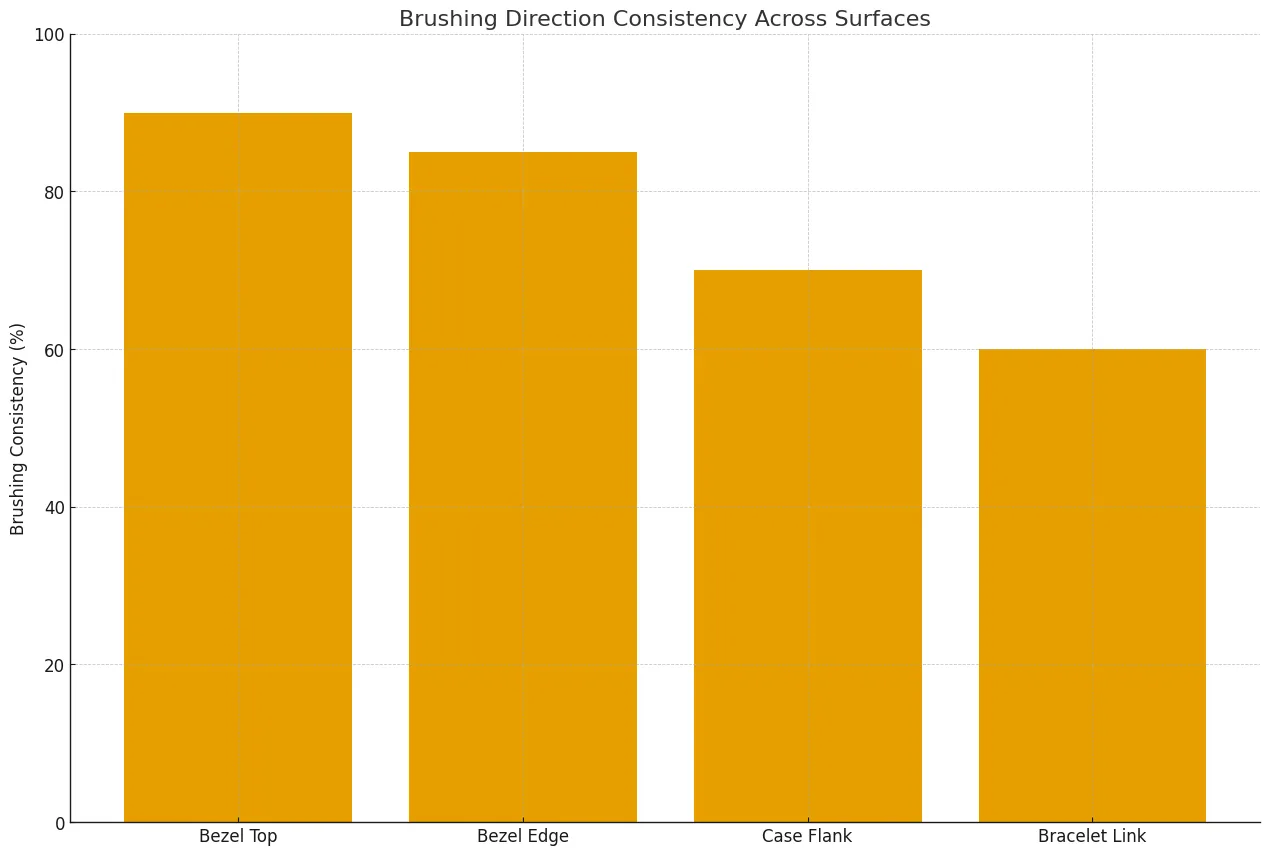
Brushing consistency differs across case surfaces; bezel tops and edges show the highest alignment, while flanks and bracelet links tend to vary more.
5.3 Light-and-Touch Assessment
- Unbroken brushing lines: Brushing should not wander or produce sudden changes in direction at case edges.
- Continuous bevel reflections: When you tilt the watch slowly, the bevel should reflect light as a nearly unbroken “ribbon” rather than a series of disjointed flashes.
- Bracelet edges that feel smooth to the fingertip: Interior surfaces and clasp edges should not produce hotspots or sharp sensations during day-to-day movements.
These observations are based on generalised finishing principles found across modern sports-luxury designs, not on any specific OEM specification sheet.
6. Structural Integrity & Bracelet Comfort
6.1 Structural Coherence: “One Object” vs. “Many Parts”
If you pick up an Offshore-style watch and just turn it slowly between your fingers, there’s a moment where you can already sense how “together” the case feels. With a audemars piguet royal oak offshore replica, the quickest check is simply to look along the side while tilting it a little. The bezel, the mid-case and the first end-link shouldn’t look like three different decisions. When they do, your eyes will catch it immediately — a faint step here, a change of angle there — the sort of thing you only notice once and then can’t un-see.
In replica-level construction, some micro-movement between those parts is normal, and honestly expected, but there’s a difference between “a bit of tolerance” and “a shape that never quite lines up”. If the bracelet slightly lifts away from the case when you flex it, or if you can see a thin line of light where the end-link meets the case, the watch tends to twist more on the wrist over the course of a day. When the contour stays continuous — not mathematically perfect, just visually calm — and the clasp closes the same way every time and ends up roughly under the centre of the wrist rather than wandering to one side, the whole piece feels more settled. It’s the sort of stability you only notice after a few hours, when it either annoys you… or disappears into the background in the best possible way.
6.2 Bracelet Articulation & Wrist Contouring
A bracelet is a mechanical system as much as it is a visual element. Comfort emerges from three structural aspects:
- Shorter link modules that allow natural curvature around the wrist and minimise flat “bridging” sections.
- Consistent pivot tension that ensures a stable drape without stiff segments or excessively loose links.
- Softened interior edges that avoid friction and pressure points when the wrist flexes or rests against a surface.
Rigid, long-link bracelets can exaggerate rocking and hotspots. Well-articulated bracelets “flow” around the wrist, distributing weight evenly so that the watch feels anchored but not restrictive, even after extended periods of use.
6.3 Three Essential Comfort Tests
- Side-contact test: Press the inner case edge gently against your wrist — a smooth transition indicates better finishing.
- Bracelet drape test: Let the bracelet fall vertically; a continuous arc suggests balanced articulation.
- Clasp placement test: A centered clasp prevents twisting and supports a stable wearing posture.
6.4 Pusher & Crown Guard Ergonomics in Daily Use
On Offshore-style designs, prominent pushers and crown guards are part of the visual language, but they also influence comfort. In general usage scenarios, most wearers find that slightly rounded crown-guard edges and pushers that do not protrude excessively beyond the case flank are easier to live with during typing, driving and pocket access.
- Pusher protrusion: If the pushers sit too far from the case flank, they can press into the back of the hand when flexing the wrist upwards.
- Crown guard shaping: Guards with softened internal curves tend to slide past jacket cuffs more easily than sharply angular designs.
- Contact points: During extended desk work, any sharp transition between crown guard and mid-case can leave a pressure spot; lightly contoured guards reduce this effect.
These ergonomics notes reflect typical behaviour observed across Offshore-style constructions and are intended as general design guidance rather than measurements for any single reference.
7. Long-Term Wearing Impressions
7.1 From Awareness to Integration
Most Offshore wearers experience a two-phase adaptation. During the first few days, the watch feels structured and distinctly present — a compact engineered object with noticeable geometry. After several days of wear, most users report reduced awareness during wrist flexion, especially once the strap or bracelet has conformed to the natural arc of the wrist and the clasp has settled into a centred position.
This transition is not about the watch “disappearing” but rather becoming predictable in its movements: the way it clears desk edges, how it slides under soft cuffs, and how it behaves when rotating the wrist while typing or gesturing.
7.2 All-Day Dynamics
Comfort across an eight-to-twelve-hour day often depends more on distribution than absolute weight for many wearers:
- Steel bracelets distribute weight evenly and provide structural clarity that suits desk work, commuting and smart-casual outfits.
- Rubber straps excel in warm climates and active routines with flexibility, moisture resistance and a visually slimming effect.
- Alternative straps offer intermediate behaviour, adding comfort while retaining a sense of formality.
Across wrist sizes from approximately 6–9 in (15–23 cm), observed usage patterns suggest that the combination of lug curvature, end-link articulation and clasp stability is more influential for long-term comfort than isolated metrics such as listed case weight.
For additional context, the site’s Customer Reviews section offers general user observations on wear comfort and finishing impressions.
8. Frequent Misjudgments When Choosing Offshore
8.1 Overreliance on Studio Photography
Studio lighting can flatten thickness, exaggerate metallic contrast and shift dial colour. A watch that looks balanced in a front-facing, high-CRI image may appear taller or more dominant on your wrist under typical indoor lighting. Side-profile photos and natural-light wrist shots provide a more reliable basis for evaluating scale and ergonomics.
Lighting temperature also plays a role: daylight-balanced 5600 K lighting often reveals cooler steel tones and sharper texture contrast, while tungsten-type 3200 K lighting can shift dark dials toward warmer charcoal tones. Accounting for these differences helps avoid overestimating vibrancy or underestimating thickness.
8.2 Misreading Dial Colour & Texture
Textures such as Mega Tapisserie interact strongly with light, creating shadows that appear deep in oblique lighting but flatten under direct midday sun. A dial that looks vivid blue in a product image may appear charcoal-blue or near-black indoors. When evaluating audemars piguet royal oak offshore replica dials, consider the full range of lighting environments in which the watch will be worn.
8.3 Undervaluing Strap & Clasp Engineering
The clasp is the component you interact with most often. Well-engineered clasps show:
- Predictable, secure closing resistance
- Smooth, rounded transitions where metal meets skin
- Comfortable alignment with the underside of the wrist
An uncomfortable clasp can overshadow excellent case and dial work, so its geometry and finishing deserve deliberate inspection.
9. FAQ — Structure, Craft & Durability
9.1 Is Offshore style too bold for work?
In many modern smart-casual environments, no. The key is practical integration: if the watch clears desk edges and moves smoothly under your usual sleeves, the Offshore silhouette reads as confident and contemporary rather than excessive.
9.2 Does dial texture really matter?
Yes. Dial texture has a major impact on how the watch behaves under different lighting conditions and how engaging it feels over time. On a audemars piguet royal oak offshore replica, texture is part of the line’s expressive identity, helping reinforce depth and mechanical character.
9.3 Which feels more refined: steel bracelet or rubber strap?
Neither is intrinsically “more refined” — they simply communicate different moods:
- Steel — structured, architectural, urban
- Rubber — athletic, breathable, modern
Both can feel premium when finishing is executed with care.
9.4 Which finishing details matter most in everyday use?
Three common factors often define day-to-day satisfaction:
- Brushing alignment across bezel and case
- Continuous, clean bevels
- Bracelet interior smoothness and edge rounding
9.5 What is bezel screw alignment variance?
In most Offshore-style designs, hexagonal or slotted screws are aesthetic anchors. Generalised observations show that small variances in screw alignment — often within a few degrees — are normal in replica-level construction. These variances do not affect structural integrity but may influence visual symmetry when viewed up close.
9.6 How does movement height tolerance affect caseback fit?
The movement doesn’t always sit at the exact same height in every build. If it’s a touch higher or lower, the caseback can feel a bit different when you start tightening it. Most of the time it closes normally. But if the first turn feels strangely stiff, or almost too easy, that usually means something inside isn’t seated perfectly — often just a tiny piece of dust or a ring slightly off. It’s better to check than force it shut.
9.7 What is strap-hole spacing tolerance and why does it matter?
Straps look simple, but the distance between the holes can make a real difference in how the watch wears. On rubber or leather-style straps, the spacing isn’t always identical — a millimetre here or there happens more often than people think. If your wrist size lands “between” two holes, that small variation decides whether the watch feels a bit tight or just right. Shorter spacing tends to help slimmer wrists fine-tune the fit, while wider spacing is usually less noticeable on larger wrists where half a notch doesn’t change the comfort much.
10. Value Density: How Offshore Rewards You Over Time
10.1 “Value Density” in a Design-First Sense
For audemars piguet royal oak offshore replica pieces, value density arises from small, repeated interactions that accumulate into long-term enjoyment:
- Light gliding across the octagonal bezel as the wrist rotates
- A decisive snap of a well-designed clasp
- The depth and changing character of dial texture under shifting light
- The stable way the case settles into your wrist’s natural angle
10.2 How Configuration Shapes Long-Term Fulfilment
Your configuration choices — dial colour, strap type, case stance — determine whether the watch becomes a daily companion or a specialised piece. A dial that complements your wardrobe tends to appear more frequently in rotation, and a strap suited to your climate and routine generally remains comfortable across long hours.
10.3 Practical Value-Density Checklist
Before choosing any audemars piguars piguet royal oak offshore replica, ask yourself:
- Does the case outline harmonise with the width of my wrist?
- Will this dial remain visually coherent under both daylight and indoor lighting?
- Can I comfortably wear this bracelet or strap for 8–10 hours straight?
- Does this design integrate naturally with the clothes I actually wear?
11. Closing Summary
A well-chosen audemars piguet royal oak offshore replica is more than a bold timepiece. It is a piece of wearable geometry that blends deliberate case architecture, tactile craftsmanship and confident wrist presence. The octagonal bezel, layered case structure, textured dial and carefully considered ergonomics work together to create a watch that rewards repeated wear.
Matched intelligently to your wrist, wardrobe and routine, Offshore style becomes a long-term anchor in a collection — bold, architectural and unmistakably expressive.
Technical Boundaries & Limitations
All dimensional references in this guide use generalised ranges based on common design patterns found across Offshore-style watches and are not OEM specifications. Observations about brushing, bevel execution, ergonomics and tolerances reflect typical behaviour seen in general replica-level construction and should be interpreted as design guidance rather than diagnostic evaluation. Lighting examples refer to typical daylight (≈5600 K) and tungsten-type indoor lighting (≈3200 K).
Internal Link Footnotes
— Audemars Piguet replica category
— Royal Oak 15400ST style reference
— Royal Oak Offshore Diver style reference
Authority Reference Footnotes
[MIH] Musée International d’Horlogerie — institutional reference on horological craft, case architecture and multi-surface finishing.
[FHH] Fondation de la Haute Horlogerie — publicly cited horology finishing principles and design guidelines.
Last updated: 2025-11-26
Showing 1–9 of 80 results
-
Sale!
 Audemars Piguet
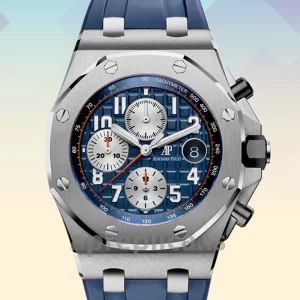
Audemars Piguet Royal Oak Offshore 26470ST.OO.A027CA.01 Men’s 43mm Quartz Rubber Band
Price range: $199.00 through $899.00ClearAAA ReplicaAAAAA CloneQuartz -
Sale!
 Audemars Piguet
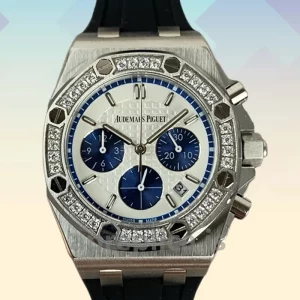
Audemars Piguet Royal Oak Offshore 37mm 26231ST.ZZ.D010CA.01 Men’s White Dial Silver-tone
Price range: $219.00 through $1,599.00ClearAAA AutomaticAAAAA CloneQuartz -
Sale!
 Audemars Piguet
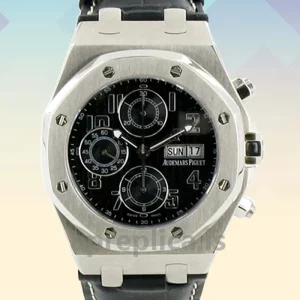
Audemars Piguet Royal Oak Offshore Men’s RoyalOakOffshore001 42mm Quartz/Automatic Black Dial
Price range: $199.00 through $1,599.00ClearAAA AutomaticAAAAA CloneQuartz -
Sale!
 Audemars Piguet
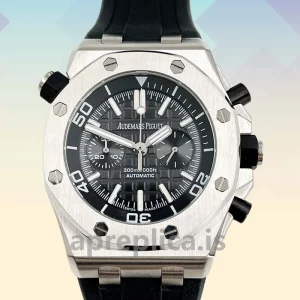
Audemars Piguet Royal Oak Offshore Diver 42mm Men’s 26703ST-BK Silver-tone Black Dial
Price range: $299.00 through $1,599.00ClearAAA AutomaticAAAAA CloneQuartz -
Sale!
 Audemars Piguet
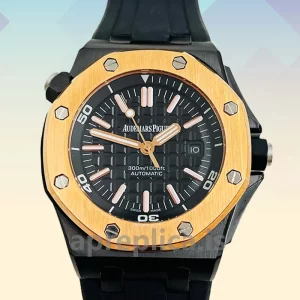
Audemars Piguet Royal Oak Offshore 44mm Men’s 15709TR.OO.A005CR.01 Automatic Black Dial
Price range: $199.00 through $1,599.00ClearA ReplicaAAA ReplicaAAAAA Clone -
Sale!
 Audemars Piguet
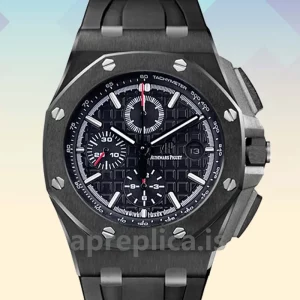
Audemars Piguet Royal Oak Offshore Men’s 44mm 26400AU.OO.A002CA.01 Rubber Band
Price range: $219.00 through $1,599.00ClearAAA Automatic-44mmAAAAA Clone-44mmQuartz-42mm -
Sale!
 Audemars Piguet
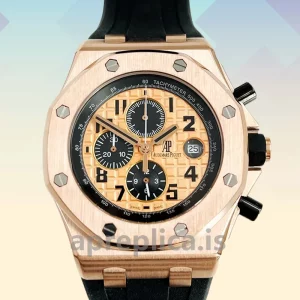
Audemars Piguet Royal Oak Offshore Men’s 43mm 26470OR.OO.A002CR.01 Quartz/Automatic
Price range: $199.00 through $1,599.00ClearAAA AutomaticAAAAA CloneQuartz -
Sale!
 Audemars Piguet
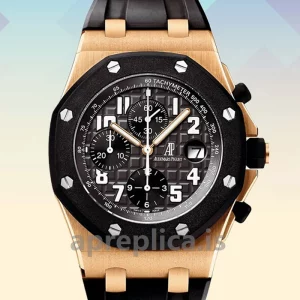
Audemars Piguet Royal Oak Offshore 43mm Men’s 25940OK.OO.D002CA.01 Grey Dial
Price range: $199.00 through $899.00ClearAAA ReplicaAAAAA CloneQuartz -
Sale!
 Audemars Piguet
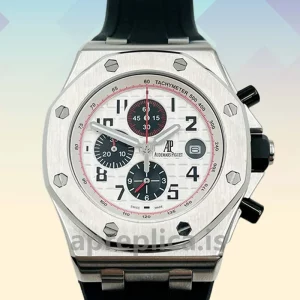
Audemars Piguet Royal Oak Offshore 43mm Men’s 26170ST.OO.D101CR.02 Quartz/Automatic White Dial
Price range: $199.00 through $1,599.00ClearAAA AutomaticAAAAA CloneQuartz